

 | ||
|
| ||


Cords & Ropes
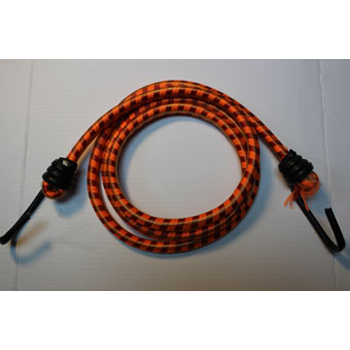
Product Name : Bungee Cord with Hook
| Description |
| "Bungee Cord with Hook" is a finished elastic cord assembly consisting of a round elastic cord, hooks, and secure end attachments. It provides flexible fastening for general-purpose bundling, securing, and organizing applications. Single-hook and double-hook configurations can be selected according to the attachment points and intended use. The cord typically combines a braided polyester, nylon, or polypropylene (PP) outer covering with a rubber or latex elastic core. Metal, coated metal, and plastic hooks are available for different applications. Cord diameter, elastic construction, hook geometry, and attachment methods influence stretching behavior, finished length, connection stability, and safe handling. Common applications include outdoor accessories, tent components, tarpaulin fastening, bags, and general-purpose bundling. Outdoor products may require attention to weather exposure and hook materials, while bag and accessory applications often prioritize flexibility, finished dimensions, and compatibility with attachment points. Product suitability depends on actual use conditions. Fu Jyi Lin supports custom Bungee Cord with Hook development, including cord materials, diameters, overall finished lengths, hook configurations, colors, end attachments, and packaging. Buyers should provide the intended application, dimensions, hook drawings or reference samples, and estimated order quantities. Specific stretching, durability, or safety requirements should be communicated during initial development for technical evaluation and quotation. |
 Features |
||

Elastic Hook |

Elastic Hook |

Elastic Hook |

Elastic Hook |

Elastic Hook |

Elastic Hook |
|
Specification |
|
1. Product Name & Type "Bungee Cord with Hook" is a finished elastic cord assembly consisting of a round elastic cord, one or more hooks, and a suitable end-attachment structure. It is designed for general-purpose bundling, securing, and organizing applications. Single-hook and double-hook configurations may be selected according to the intended use, attachment points, and product requirements. The final assembly should be specified as a complete product rather than evaluated solely by its elastic cord or hook components. 2. Cord Materials & Elastic Core The outer braided covering may use **Polyester, Nylon, or Polypropylene (PP)** yarns, combined with an elastic core made from **Rubber, Latex, or other suitable elastic materials**. The outer yarns influence surface texture, abrasion behavior, and suitability for different environments. The elastic core plays an important role in extension, recovery, and tension characteristics. Overall performance also depends on braid density, core configuration, and cord diameter. Latex restrictions, outdoor exposure, or special material requirements should be identified during initial development to support appropriate material selection. 3. Cord Construction The typical construction consists of a round braided textile covering surrounding an internal elastic core. The interaction between the covering yarns and elastic elements creates the cord's extensible structure. Braiding density, the number and arrangement of elastic elements, cord diameter, and material combinations can affect roundness, extension, elastic recovery, and handling. The appropriate construction should be selected according to the application, hook configuration, and required stretching characteristics. Representative samples may be used to confirm the finished configuration. 4. Hook Materials & Types Hook options may include **Metal Hooks, Coated Metal Hooks, Plastic Hooks**, and other suitable designs. Metal hooks should be evaluated for material, wire diameter, opening size, surface treatment, and environmental exposure. Coated metal hooks require consideration of coating durability and contact with surrounding materials. Plastic hooks should be assessed for material characteristics, shape, deformation behavior, and intended loading conditions. Hook opening, geometry, and attachment method must be compatible with the cord diameter and the intended connection point. Hook material alone does not establish the strength of the complete assembly. 5. Hook Attachment & Assembly Single-hook and double-hook arrangements may be developed with suitable end loops, folded-back cord ends, clamping components, or other compatible attachment methods. The hook design, cord diameter, and end-retention method must work together. Slippage, loosening, or deformation at the attachment point can affect the performance of the finished product. **Single-hook and double-hook configurations may require different finished-length measurement references. The hook attachment method also directly affects end-retention strength and overall product safety.** Where specific attachment strength, extension, or loading requirements apply, these should be communicated before development and verified using the fully assembled product. 6. Regular Diameters Regular cord diameters include **4, 5, 6, 8, and 10 mm**. Each diameter should be paired with an appropriate elastic core, braided covering, hook design, and attachment structure. Diameter selection can influence the product's appearance, handling, stretching tension, and hook compatibility. These are individual regular sizes rather than a continuous diameter range. Available material combinations, dimensional tolerances, and hook compatibility should be confirmed for each configuration. 7. Special & Custom Diameters Special diameters include **7, 9, 11, and 12 mm**, subject to project-specific evaluation. Custom diameters require consideration of braided construction, elastic core configuration, hook opening, and end-attachment compatibility. Larger cords may require different hooks or retaining components rather than simply using the same assembly method as smaller cords. Final specifications, material combinations, and manufacturing feasibility should be confirmed through technical review and sampling where necessary. 8. Finished Length & Dimensional Tolerance Regular finished lengths include **15, 20, 25, and 30 cm**. Special lengths include **50, 75, and 100 cm**, with other custom lengths subject to evaluation. **All listed lengths refer to the overall finished product, including the hook or hooks, measured in its unstretched condition—not the cut length of the elastic cord alone.** Measurement start and end points may differ between single-hook, double-hook, and other hook configurations. The measurement method should therefore be agreed upon using drawings, samples, or defined inspection instructions before ordering. End loops, attachment methods, and natural elastic recovery may influence the measured length. Applicable dimensional tolerances should be confirmed according to the final construction and acceptance requirements. 9. Colors & Appearance Options Single-color coverings, multicolor braided designs, specified colors, and other suitable appearance options may be evaluated according to customer requirements. The outer yarn material, braiding construction, and color arrangement can affect the finished appearance. Reflective yarns may also be incorporated into compatible cord constructions where reflective decorative effects are required. Specified color tolerances or reflective performance requirements should be confirmed through representative samples and appropriate testing. The use of reflective material does not automatically establish compliance with a defined retroreflective standard. 10. Elongation, Elastic Recovery & Tensile Performance The extension, elastic recovery, and stretching tension of a bungee cord depend on the elastic core material, core configuration, cord diameter, braid density, and finished assembly. **Maximum elongation is not the same as the recommended working extension and must not be used on its own to determine a safe working load.** Products with the same nominal diameter can behave differently when manufactured with different core or braid configurations. If a project requires specified extension, tension at a defined elongation, recovery after repeated stretching, or durability performance, the buyer should provide the applicable test methods and acceptance criteria. Performance should be verified using the complete Bungee Cord with Hook assembly. 11. Hook Strength & Assembly Safety The load-bearing behavior of the complete assembly depends on the elastic cord, hook material, hook geometry, and end-attachment construction. Cord tensile strength or hook material alone cannot establish the strength or safety of the finished product. The intended application should be evaluated for hook engagement, potential end-attachment slippage, deformation, and sudden elastic recoil. Requirements involving working tension, repeated extension, or attachment retention should be assessed through tests on the fully assembled product. **General-purpose Bungee Cord with Hook products must not be assumed suitable for overhead lifting, climbing, securing people, or regulated cargo restraint applications.** Such uses require appropriate product design, qualification, and verification; they are not covered by general-purpose specifications. 12. Functional Materials & Use Conditions For outdoor, humid, or other demanding environments, suitable **UV-resistant, weather-resistant, or corrosion-resistant** material options may be evaluated according to the project. Material selection should account for the intended environment before sourcing the cord yarns, elastic core, and hooks. Outdoor applications may require attention to UV exposure, temperature changes, and corrosion of metal components. Repeated-use applications should also consider elastic fatigue and end-attachment condition. If specific weathering, corrosion, or performance standards apply, buyers should provide the relevant testing requirements during the initial RFQ and development stage. Suitability should be verified using the finished assembly. 13. Packaging & Supply Format **Individual packaging** is the basic supply format for finished Bungee Cord with Hook products. Paired sets, multipacks, specified quantities per bag, and other customized packaging arrangements may also be evaluated. Product labels, barcodes, custom bags, retail packaging, and specific shipment configurations should be identified during quotation so that packaging materials, assembly operations, and costs can be reviewed. Final packaging options depend on product configuration, order quantity, and production conditions. 14. Minimum Order Quantity (MOQ) The basic minimum order quantity is **3,000 finished pieces in total, with up to two colors, provided the cord diameter, overall finished length, and hook configuration remain the same**. Two colors may be included within the same basic order quantity. The quantity allocated to each color should be confirmed during quotation; an equal split is not automatically required. Different diameters, finished lengths, hook types, special materials, functional requirements, or customized packaging may affect MOQ calculations and production arrangements. These conditions should be reviewed before the order is finalized. 15. Applications & OEM / ODM Custom Development Bungee Cord with Hook may be used for general outdoor accessories, tent-related accessories, tarpaulin securing, bag closures, bundling, and other applications suitable for elastic fastening. The appropriate configuration depends on the object being secured, attachment points, cord diameter, finished length, hook design, and required stretching behavior. Outdoor or repeated-use applications may also require evaluation of environmental resistance and attachment durability. Fu Jyi Lin supports the evaluation of customized cord materials, diameters, finished lengths, hook configurations, colors, end attachments, and packaging. For technical review and quotation, buyers should provide the intended application, overall finished dimensions, hook photos or drawings, reference samples, estimated quantities, and any special performance requirements. --- **Specification Notes** The specifications listed on this page represent Fu Jyi Lin's regular Bungee Cord with Hook product configurations, manufacturing capabilities, and customization options available for project evaluation. Final cord diameters, overall finished lengths, hook materials, attachment methods, colors, packaging, and other technical requirements should be confirmed according to the actual product and order specifications. Extension, recovery, tension, and safe-use characteristics depend on the combined construction of the elastic cord, hooks, and end attachments. Buyers requiring defined tensile performance, attachment strength, durability, or safety compliance should provide the applicable regulations, test methods, and performance criteria during the initial RFQ and development stage. Verification should be conducted on the fully assembled finished product. General-purpose Bungee Cord with Hook products should not be used for overhead lifting, climbing, securing people, or regulated cargo restraint without appropriate design, testing, and qualification for those specific purposes. **Fu Jyi Lin reserves the right to adjust product specifications when necessary.** |
|
Asks Description |
|
Frequently Asked Questions (FAQ) Q1. How do I select the right cord diameter, elastic core, and hook type? Start by identifying what needs to be secured, the attachment points, and the required extension. Cord diameter and elastic core construction affect stretching tension and recovery, while hook opening and geometry determine compatibility with the attachment points. Rather than selecting each component separately, evaluate the cord and hooks as a complete assembly. A representative sample is recommended when connection stability or stretching performance is critical. Q2. What is the difference between single-hook and double-hook bungee cords? Single-hook designs require an appropriate attachment or termination at the opposite end. Double-hook designs provide hooks at both ends but require compatible connection points. Neither configuration is automatically stronger or safer. Hook geometry, end-attachment construction, and the intended direction of force all influence assembly performance. Buyers should consider how the cord will be installed, whether the hooks can remain securely engaged during use, and how the end attachments behave under extension. These conditions should be evaluated on the assembled product rather than judged by hook quantity alone. Q3. How should finished length, elongation, and elastic recovery be specified? Finished length should be measured in the unstretched condition and include the installed hook or hooks. Because measurement reference points may differ between configurations, buyers should define the required overall length using a drawing or approved sample. For stretching performance, specify the expected extension range and, where necessary, the required tension at a defined extension. Repeated stretching and recovery requirements should also be stated when relevant. Maximum elongation does not represent a recommended working extension or safe working load. Acceptance criteria should be agreed upon before sampling and verified on the complete assembly. Q4. What safety considerations and testing requirements should buyers review? The main considerations are secure hook engagement, reliable end attachments, and the risk of sudden recoil if a hook slips or an attachment fails. Buyers should identify the intended loading conditions, frequency of stretching, and any applicable test or regulatory requirements before product development. Where defined strength or durability performance is required, testing should cover the complete assembly. General-purpose bungee cords with hooks should not be assumed suitable for overhead lifting, climbing, securing people, or regulated cargo restraint. Safety-critical applications require appropriate product design, testing, and qualification. Q5. What information is needed for a custom Bungee Cord with Hook quotation? Provide the intended application, cord diameter, overall finished length including hooks, single-hook or double-hook configuration, hook type, colors, packaging, and estimated quantity. Hook drawings, photos, or physical samples are helpful. The basic MOQ is **3,000 finished pieces in total, with up to two colors**, using the same diameter, finished length, and hook configuration. Include any special performance or testing requirements at the RFQ stage to support accurate quotation and sample development. |
 |
Fu Jyi Lin Enterprise Co., Ltd. Copyright © 2014 |
| Address: 10071 No.17-1, SHAU ANN St., Zhongzheng Dist., Taipei City 100, Taiwan (R.O.C.)
TEL:886-2-2301-5900 , 886-2-2307-0952 FAX:886-2-2307-5424 , 886-2-2332-6930 E-Mail:info@fujyilin.com.tw |