

 | ||
|
| ||


Webbing & Tape
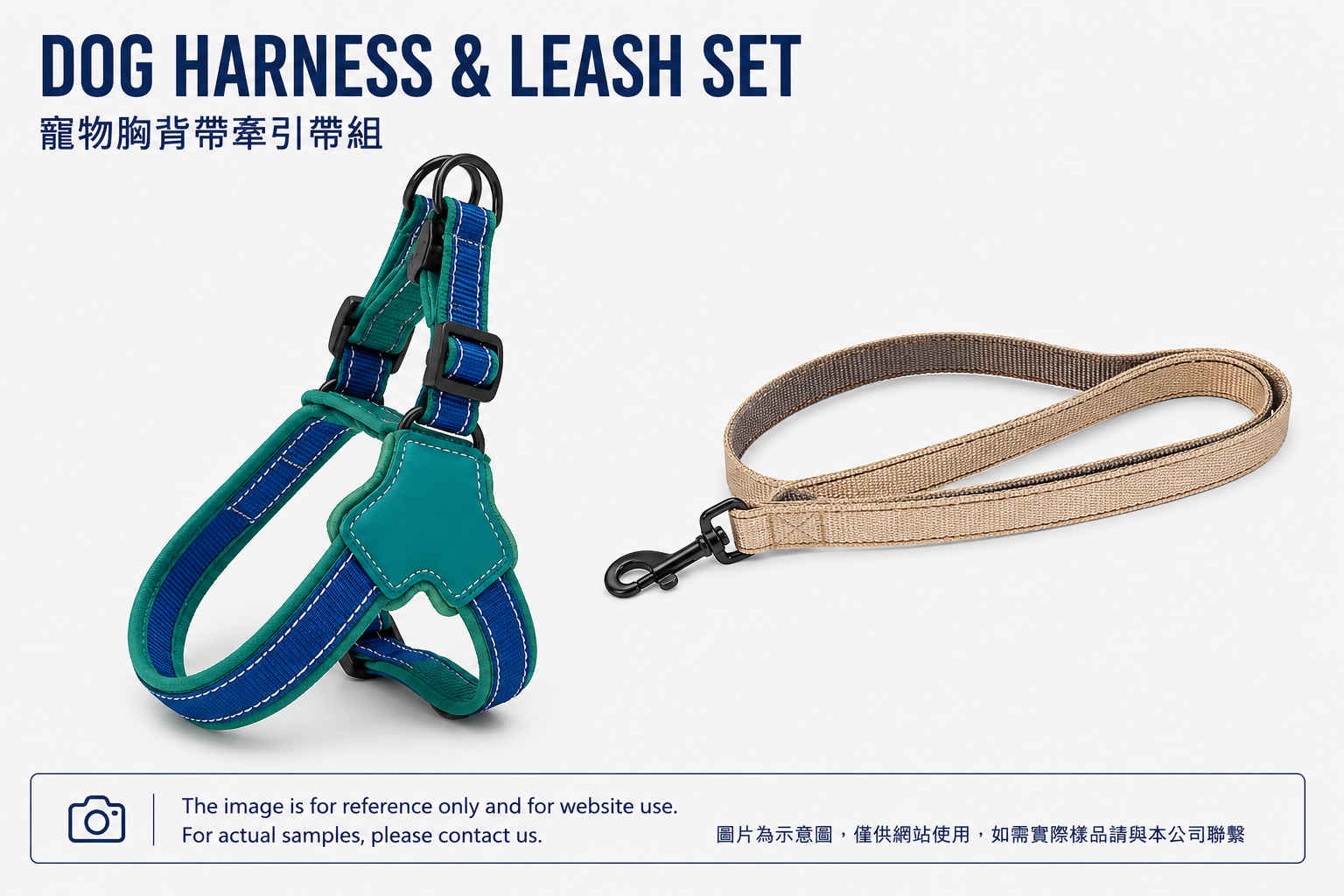
Product Name : Dog Collars, Harnesses & Leashes
| Description |
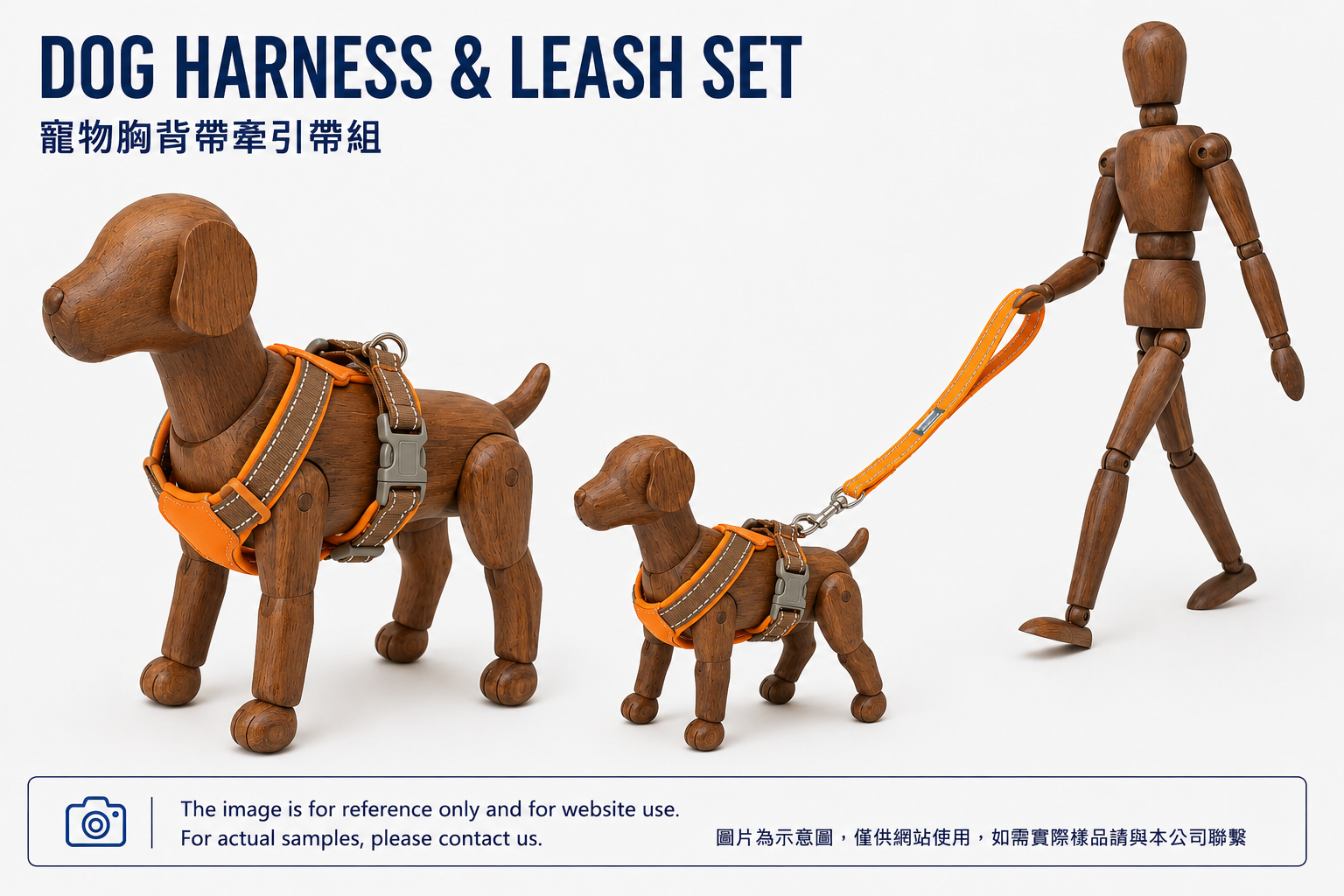
| Dog collars, harnesses, and leashes may use similar narrow textile materials, but each product requires a different structural approach. A collar forms a neck-worn attachment and adjustment system, while a harness distributes its structure across the chest and body through multiple connected sections. A leash serves as the connection between the handler and the collar or harness. These differences in fit, adjustment, connection points, and load path affect how the finished product should be constructed. Developing a finished pet product involves more than attaching hardware to webbing. Strap width, thickness, flexibility, and construction influence hardware sizing, folding, adjustment movement, sewing positions, and overall product proportions. Buckles, D-rings, hooks, and adjusters must also be matched to the strap structure and intended connection points. Harnesses typically rely on several interconnected webbing sections, while leashes must integrate the handle end, strap body, and hook end into one continuous assembly. The finished product is therefore created through the interaction of textile materials, hardware, sewing, reinforcement, and assembly rather than by any single component. Custom development focuses on building the right configuration for the intended market and application rather than simply changing color or branding. Size grading, strap proportions, hardware layout, brand presentation, reflective details, padding, coated webbing, or elastic and shock-absorbing sections may all be evaluated according to the project concept. Fu Jyi Lin supports OEM and ODM development by integrating narrow textile manufacturing, functional processing, hardware configuration, reinforced sewing, and finished-product assembly into a complete product structure suitable for sampling and mass-production planning. |
 Features
 |
||
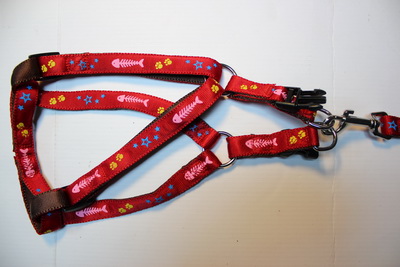
Dog Collar,Harness,Leash |
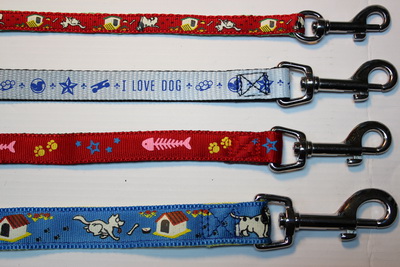
Dog Collar,Harness,Leash |
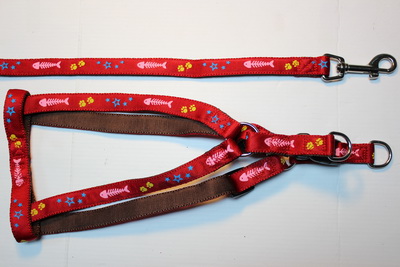
Dog Collar,Harness,Leash |
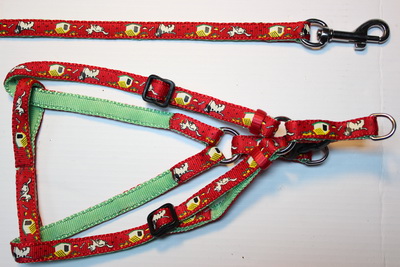
Dog Collar,Harness,Leash |
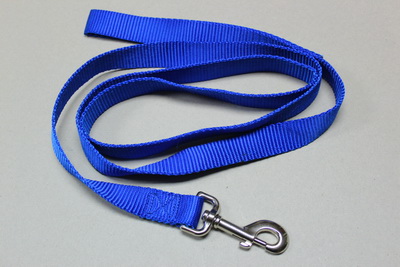
Dog Collar,Harness,Leash |
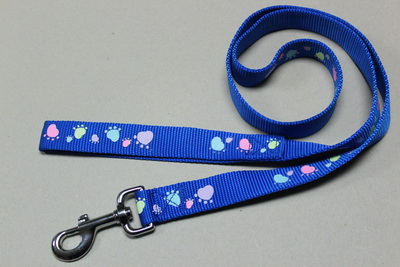
Dog Collar,Harness,Leash |
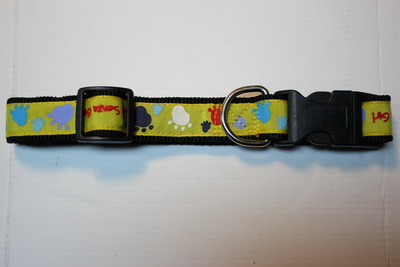
Dog Collar,Harness,Leash |
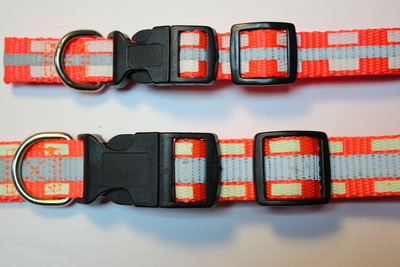
Dog Collar,Harness,Leash |
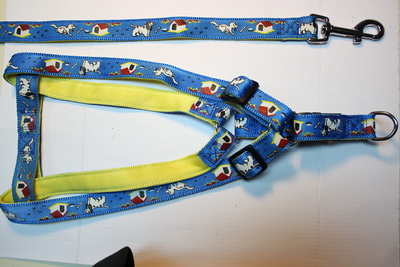
Dog Collar,Harness,Leash |
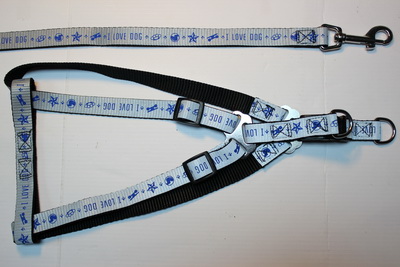
Dog Collar,Harness,Leash |
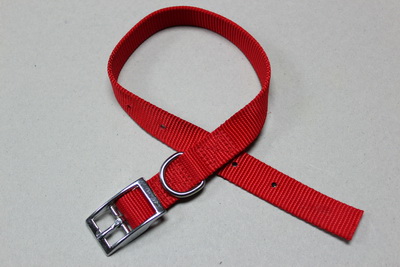
Dog Collar,Harness,Leash |
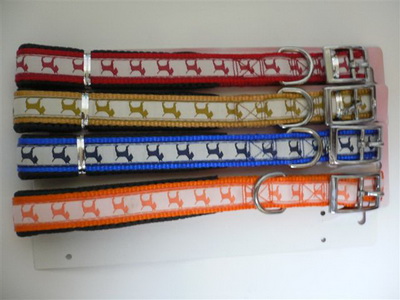
Dog Collar,Harness,Leash |
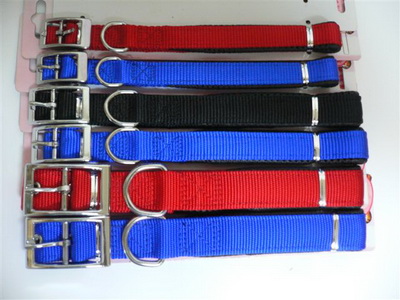
Dog Collars, Harnesses & Leashes |
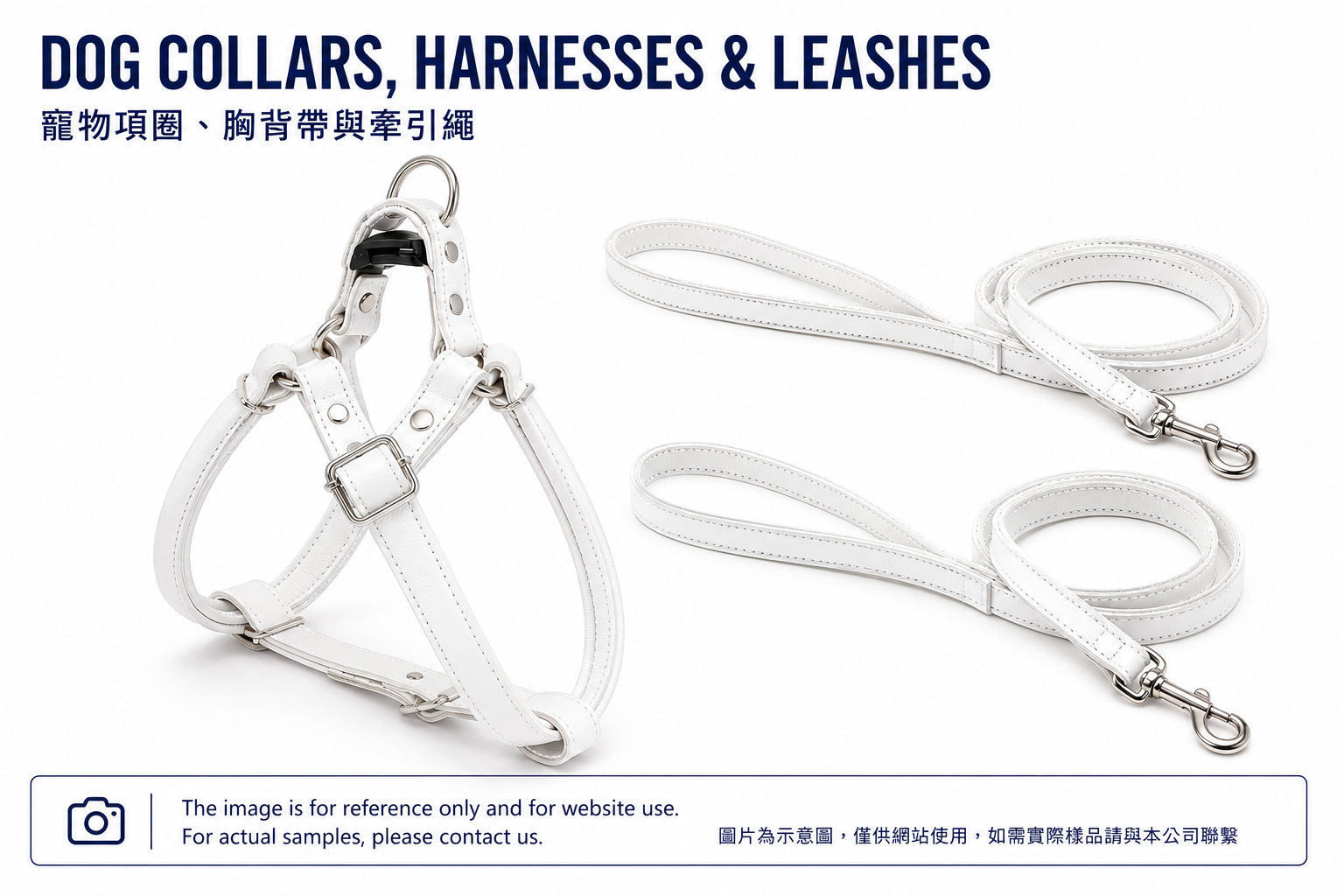
Dog Collars, Harnesses & Leashes |
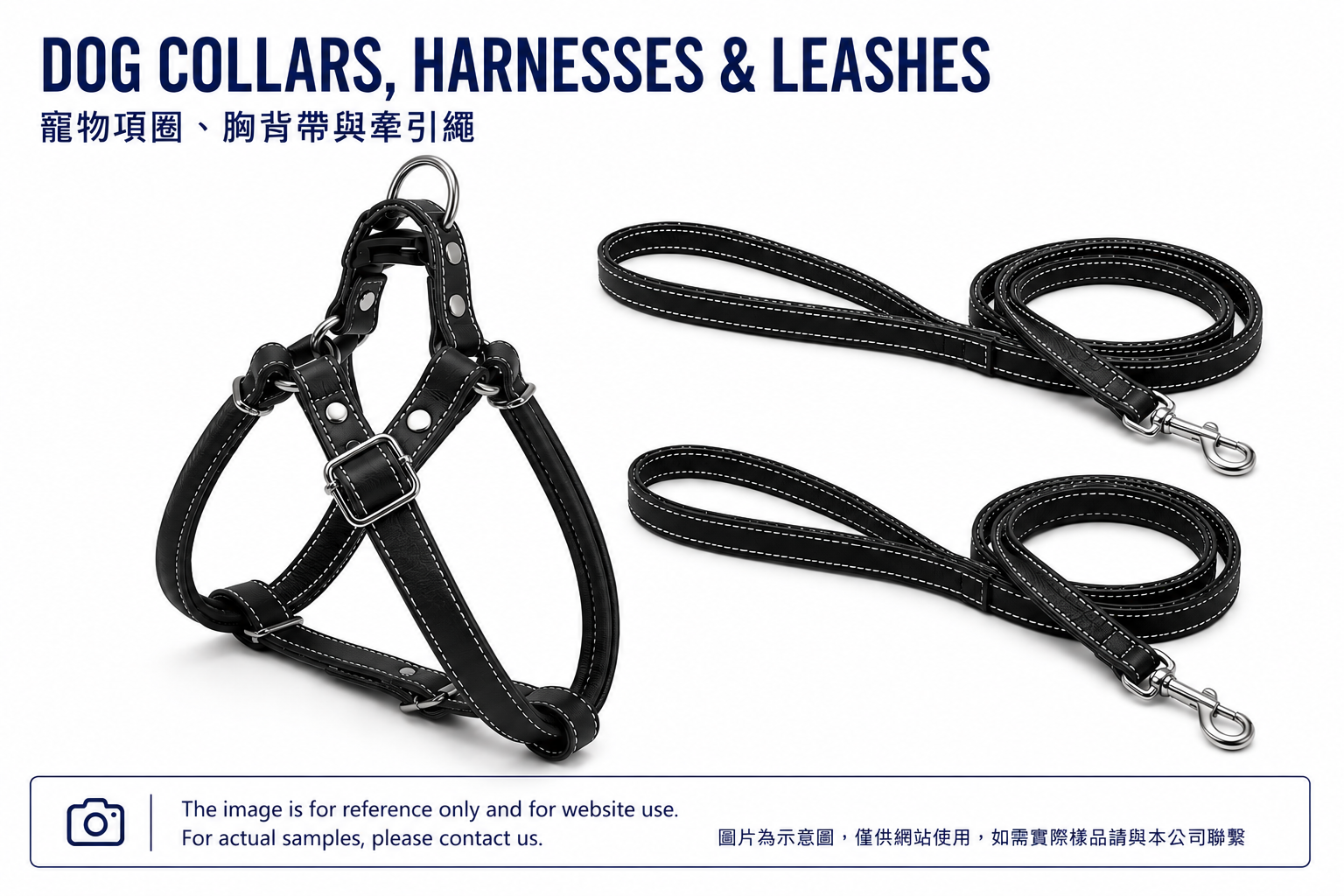
Dog Collars, Harnesses & Leashes |
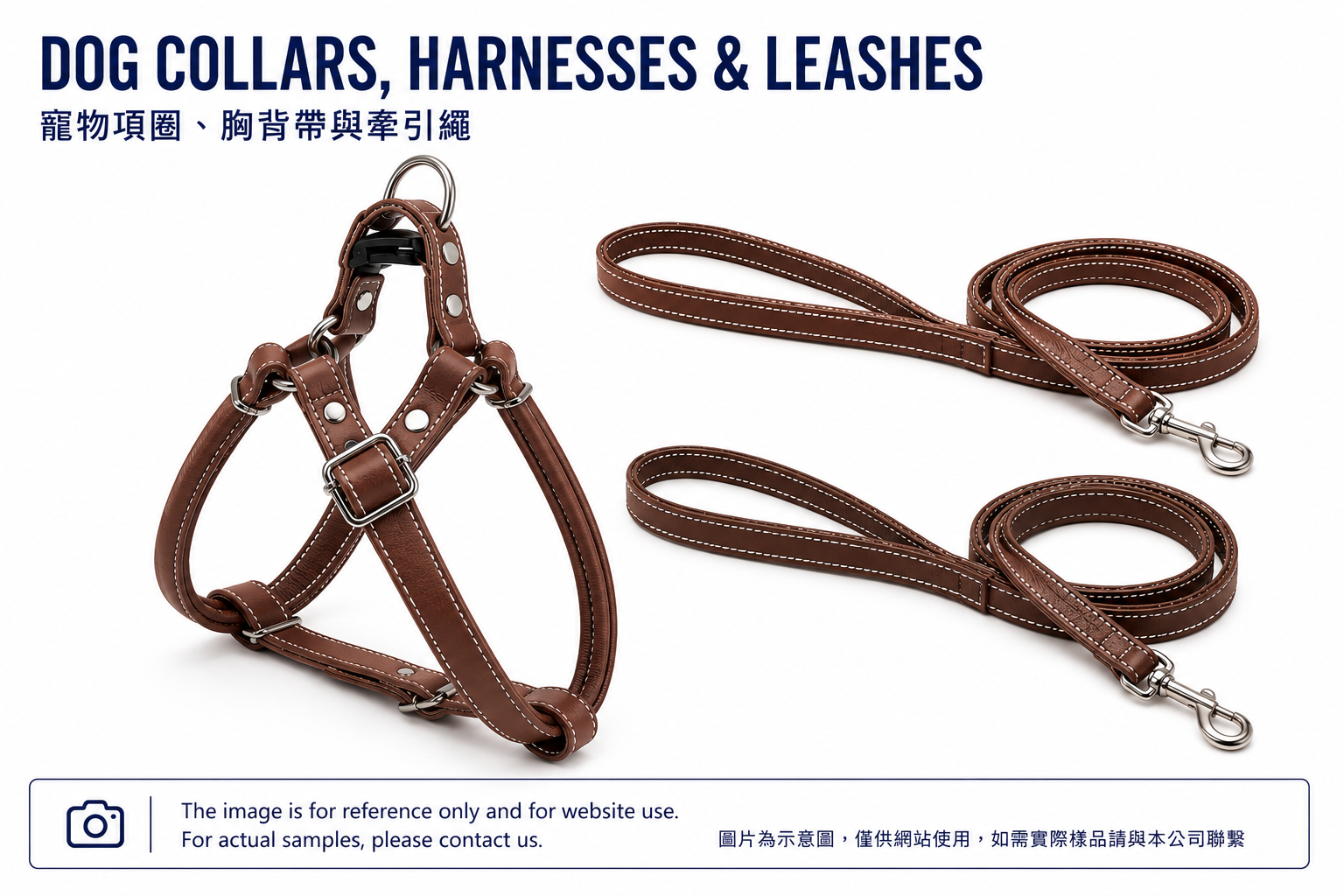
Dog Collars, Harnesses & Leashes |
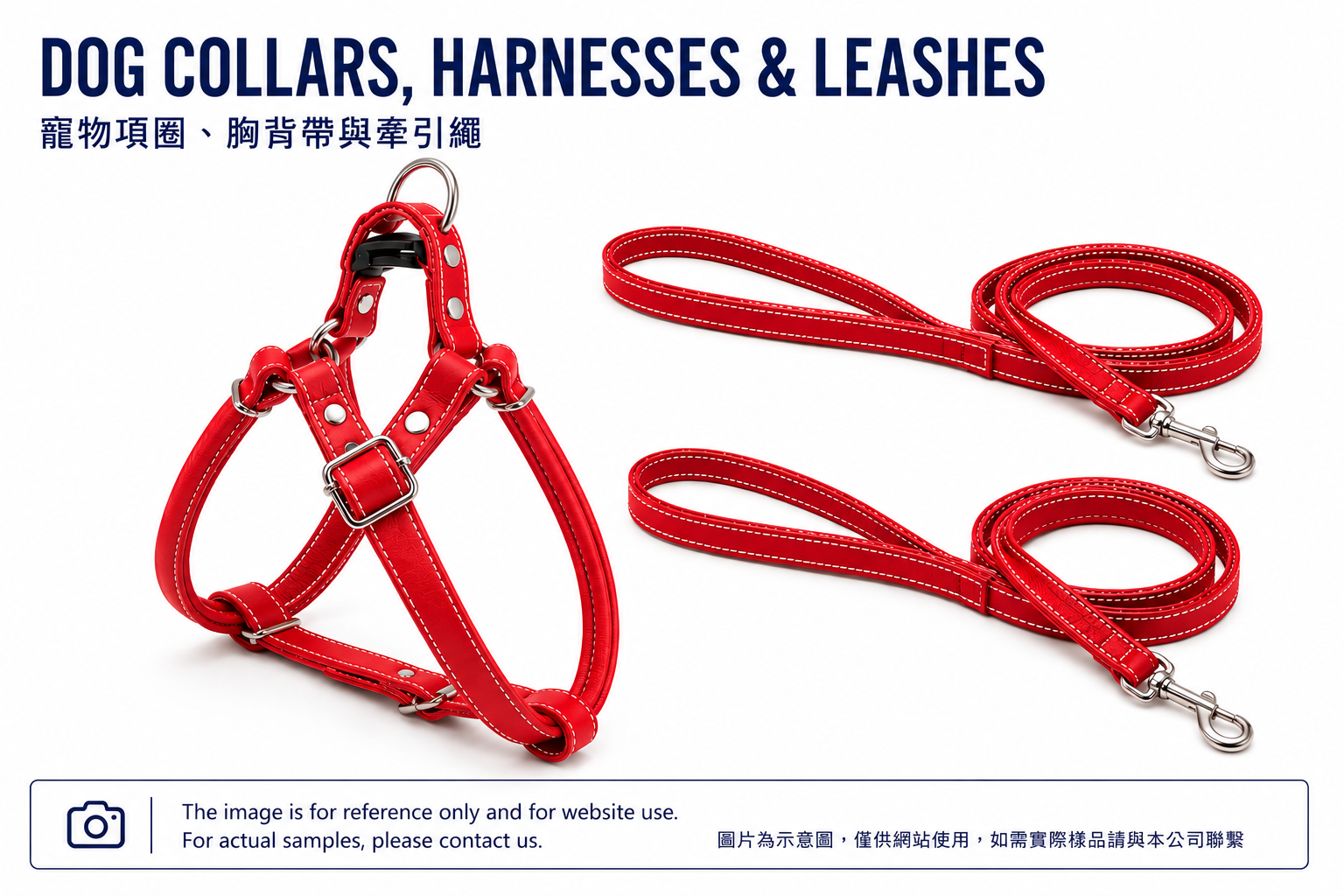
Dog Collars, Harnesses & Leashes |
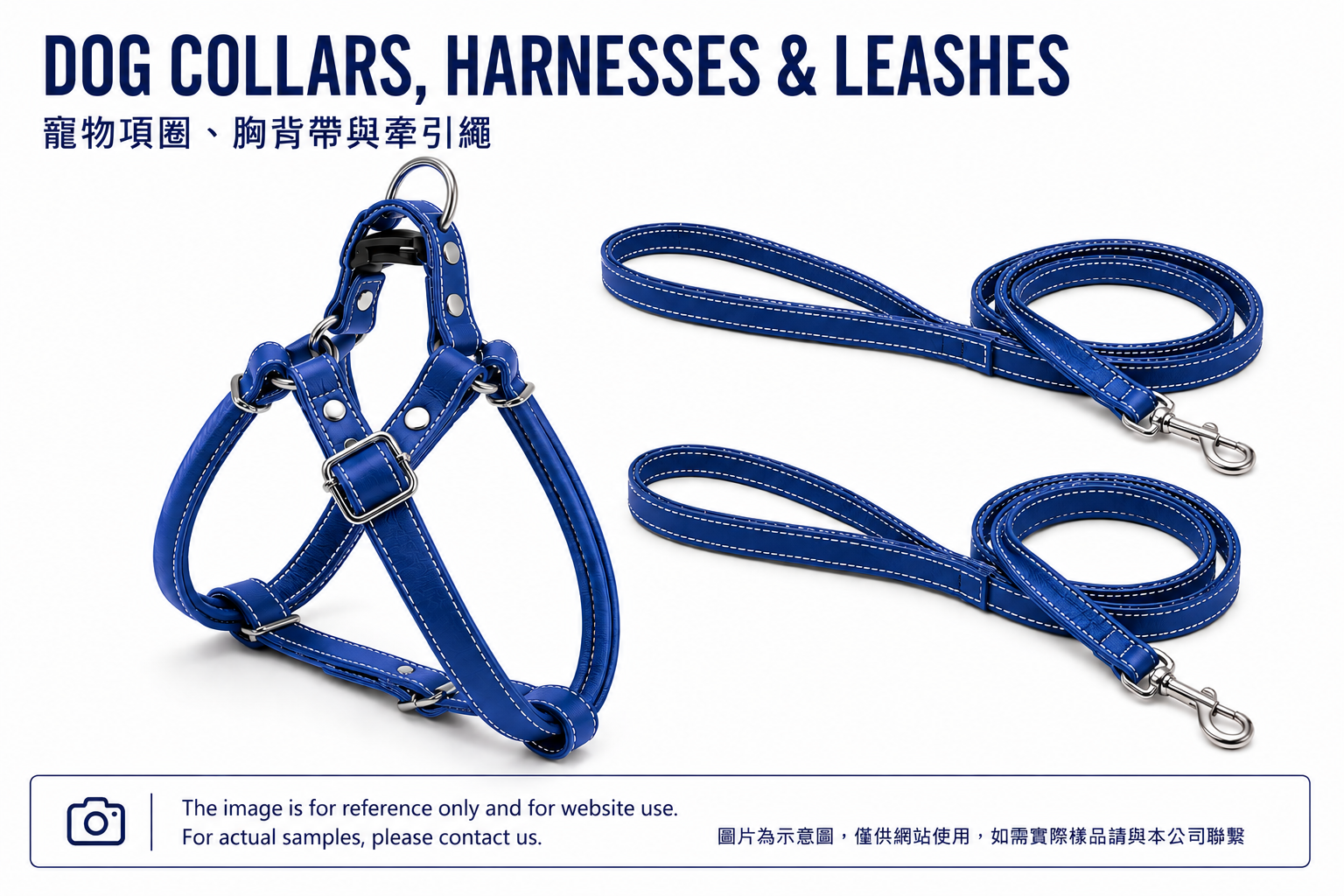
Dog Collars, Harnesses & Leashes |
|
Specification |
|
**Product Name** "Dog Collars, Harnesses & Leashes", developed as finished products using narrow woven webbing, braided constructions, or cord combined with adjusters, hardware, sewing, reinforcement, and final assembly. OEM / ODM configurations can be developed according to branding, size systems, and intended applications. **Product Type / Construction** Product configurations can be developed as **adjustable collars, webbing harnesses, fixed-length leashes, adjustable leashes, rope leashes**, and other project-specific structures. Collar, harness, and leash designs require different load paths, adjustment points, hardware arrangements, and sewing structures, which should be defined according to the intended fit and application. **Material / Construction / Size Configuration** Strap materials can be evaluated in **Polyester, Nylon, Polypropylene (PP), Cotton**, and other suitable narrow textile constructions, including woven, jacquard, braided, or related structures. Common market-reference webbing widths include **15, 20, and 25 mm**, with other widths developed according to product design. Collars are typically defined by **webbing width and neck adjustment range**; harnesses by **neck, chest / girth dimensions and adjustment range**; and leashes by **webbing width or cord diameter and finished length**. Final dimensions should follow the approved size specification or sample. **Colors / Custom Color Matching** Standard colors may be available depending on the selected strap material. Custom colors can be developed according to **Pantone references, physical color samples, or approved samples**. Reasonable color variation may occur between fiber types, dye lots, coated materials, and processing methods. Project-specific color tolerances should be confirmed during development. **Branding / Decoration** Branding can be evaluated through **Screen Printing, Heat Transfer, Dye Sublimation, Jacquard / Woven Branding, Woven Labels, Patches, logo components**, or other suitable methods. The appropriate process depends on the strap material, surface construction, artwork, and finished-product design. Branding placement should also consider hardware, adjustment areas, and sewing positions. **Hardware / Connection / Sewing & Assembly** Product structures may incorporate **Side-Release Buckles, Metal Buckles, D-Rings, O-Rings, Sliders, Adjusters, Snap Hooks, Swivel Hooks**, and other suitable components. Processing may include cutting, end finishing, folding, webbing overlap, sewing, bartack or reinforced stitching, hardware installation, adjustment setup, and complete finished-product assembly. Hardware dimensions and fixing methods should be matched to the webbing width, thickness, load path, and product structure. **Functional Design / Processing Options** **Reflective details, padding or lining, TPU / PVC-coated webbing, elastic sections, shock-absorbing or bungee constructions**, and other functional features can be evaluated according to project requirements. These are custom development options rather than standard features for every model. Their suitability depends on the base material, dimensions, hardware compatibility, sewing method, and finished-product design. **Finished-Product Structure / Load Verification** Finished-product performance should be evaluated through the complete load path, including the **webbing or cord, sewn joints, D-rings, buckles, leash hooks, adjusters, and other connection points**, rather than from strap tensile strength alone. Where specific tensile, breaking-load, seam-strength, hardware-strength, cyclic-load, or durability requirements apply, the test method, conditions, and acceptance criteria should be agreed before verification of the complete finished product or designated assembly. **Packing Options** Packing can include **individual OPP / PE bags, bulk packing, hang cards, labels, barcodes, inner boxes, retail packaging**, or other custom formats. Branding, labeling, barcode, and packaging dimensions for retail, e-commerce, or logistics programs should be provided during quotation when applicable. **MOQ** MOQ is determined by **strap material, dimensions, custom dyeing, branding process, hardware, functional processing, sewing and assembly, size grading, packaging, and order quantity**. Projects involving multiple sizes, colors, or special hardware may require different material preparation and production minimums. Final MOQ should be confirmed according to the approved project specification and quotation. **OEM / ODM Services** Fu Jyi Lin supports OEM / ODM development based on **physical samples, product photos, drawings, size charts, artwork, Pantone references, strap construction, hardware configuration, functional requirements, testing criteria, and packaging specifications**. Collar, harness, and leash constructions can be evaluated through finished-product development and sampling before establishing specifications for mass production. **Specification Notes** Dog Collars, Harnesses & Leashes are finished assemblies combining narrow textile materials, hardware, adjustment structures, reinforced sewing, and final assembly. Collar, harness, and leash products differ in fit, size grading, and load path; therefore, webbing width, thickness, hardware dimensions, sewing configuration, and connection points should be defined according to each finished-product structure. Reflective elements, padding, coated webbing, elastic or shock-absorbing sections, and other functional constructions can be evaluated as part of custom development. Manufacturing capability does not by itself represent a guaranteed performance level or safety classification. Where defined tensile, breaking, seam, hardware, cyclic-load, or other durability requirements apply, the test method, conditions, and acceptance criteria should be established before verification. Mass production should be based on the approved finished sample, confirmed artwork, size specification, strap construction, hardware configuration, sewing and assembly method, functional processing, applicable testing requirements, packaging specifications, and other mutually agreed production requirements. Fu Jyi Lin reserves the right to adjust product specifications according to product improvements, process optimization, or customer requirements without prior notice. |
|
Asks Description |
|
Frequently Asked Questions (FAQ) 1. How can the risk of tearing or failure at connection points be reduced? Failure may occur around folds, sewn joints, D-rings, buckles, hook ends, or multi-layer overlaps. Suitable overlap length, stitching, bartack reinforcement, and hardware matching should be selected according to webbing material, dimensions, and load direction to reduce localized stress. 2. How should load performance and safety-related requirements be evaluated? Finished-product performance should be evaluated through the complete load path, not webbing tensile strength alone. If tensile, breaking-load, seam, hardware, cyclic-load, or durability requirements apply, the test method, conditions, and acceptance criteria should be confirmed before testing the finished product or designated assembly. 3. How can fuzzing, pilling, fraying, or abrasion be reduced? Surface wear depends on fiber type, yarn structure, weave density, finishing, edge condition, hardware contact, and repeated friction. Suitable webbing construction, heat setting, surface finishing, or coating can be evaluated according to the intended application. Defined abrasion requirements should be supported by agreed test conditions. 4. What manufacturing processes can Fu Jyi Lin integrate? Fu Jyi Lin can integrate narrow textile manufacturing, dyeing, branding, reflective details, coated webbing, padding, elastic or shock-absorbing sections, cutting, sewing, bartack reinforcement, hardware installation, assembly, and packaging. Processing combinations are selected according to product structure and project requirements. 5. When is complete finished-product sampling recommended? Complete sampling is recommended for new constructions, special hardware, new size grading, multi-layer sewing, reflective or padded structures, coated webbing, bungee sections, or specified load and durability requirements. Sampling should confirm fit, adjustment, hardware orientation, sewing, reinforcement, assembly, and agreed functional requirements before mass production. |
|
Other |
|
|
 |
Fu Jyi Lin Enterprise Co., Ltd. Copyright © 2014 |
| Address: 10071 No.17-1, SHAU ANN St., Zhongzheng Dist., Taipei City 100, Taiwan (R.O.C.)
TEL:886-2-2301-5900 , 886-2-2307-0952 FAX:886-2-2307-5424 , 886-2-2332-6930 E-Mail:info@fujyilin.com.tw |