


 | ||
|
| ||
News |


|
| Supplier Selection Checklist: How to Choose the Right Silicone Anti-slip Elastic Manufacturer | ||||||||||||||||||||||||||||||||||||||||||||||||||
2026-07-09 11:49:42 | ||||||||||||||||||||||||||||||||||||||||||||||||||
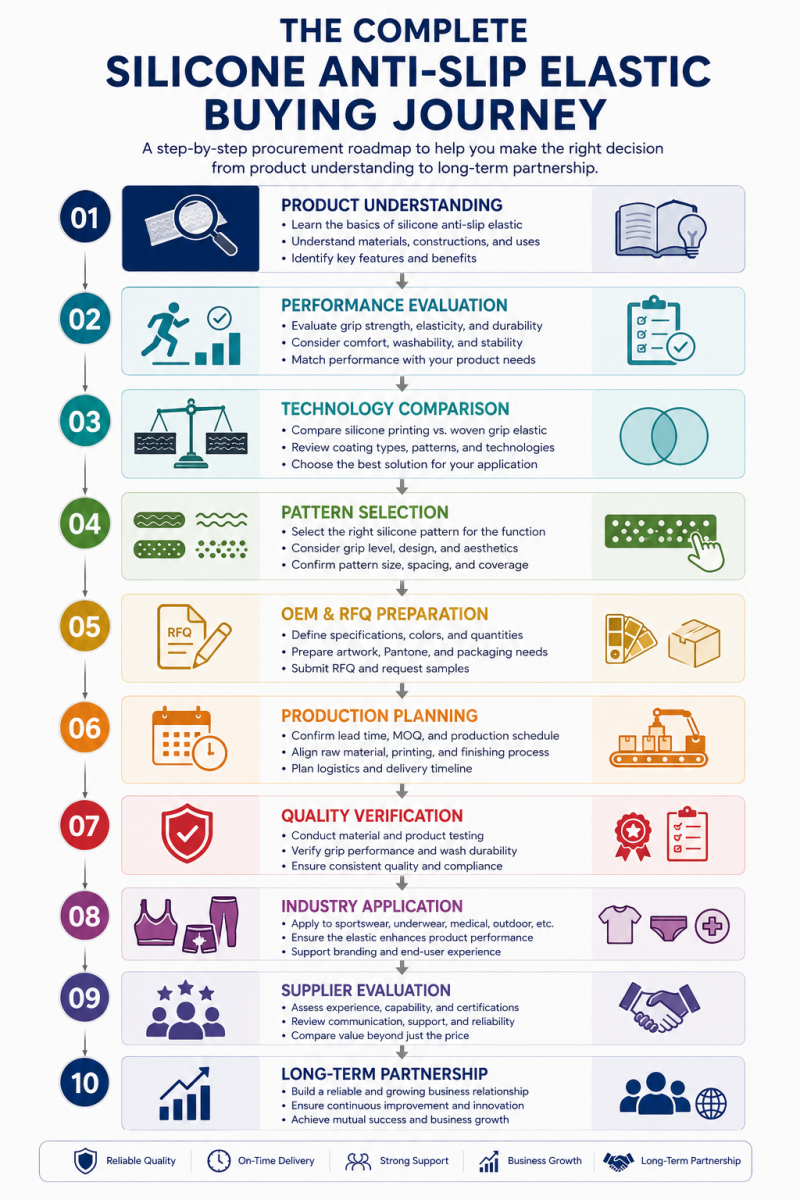
Choosing a silicone anti-slip elastic supplier is about far more than comparing quotations. A reliable manufacturing partner can help reduce development risks, maintain consistent product quality, improve production efficiency, and support long-term business growth. On the other hand, selecting a supplier based only on price may lead to quality issues, delayed deliveries, or repeated product revisions that ultimately increase procurement costs. In the previous nine articles of this series, we explored silicone anti-slip elastic from every stage of the sourcing process—from understanding the product and comparing technologies to OEM customization, quality testing, production planning, and industry applications. This final guide brings those topics together and focuses on the most important question every buyer eventually faces: How do you choose the right silicone anti-slip elastic manufacturer? Whether you are sourcing for sportswear, underwear, medical garments, workwear, or functional apparel, the following checklist will help you evaluate suppliers more effectively and make procurement decisions with greater confidence.
Why Supplier Selection Matters More Than PriceFor experienced procurement professionals, the lowest quotation is rarely the deciding factor. The real objective is to minimize procurement risk while ensuring stable production, reliable quality, and on-time delivery. A supplier with proven manufacturing experience can often prevent problems before they occur. Technical recommendations, production planning, quality control, and responsive communication all contribute to smoother product development and fewer unexpected costs. When evaluating suppliers, buyers should consider the complete sourcing process rather than focusing solely on unit price. Factors such as production consistency, silicone printing expertise, customization capability, and export experience often have a greater impact on long-term purchasing success. Remember:
Production delays, inconsistent silicone printing, excessive defect rates, or poor communication may cost far more than the initial price difference.
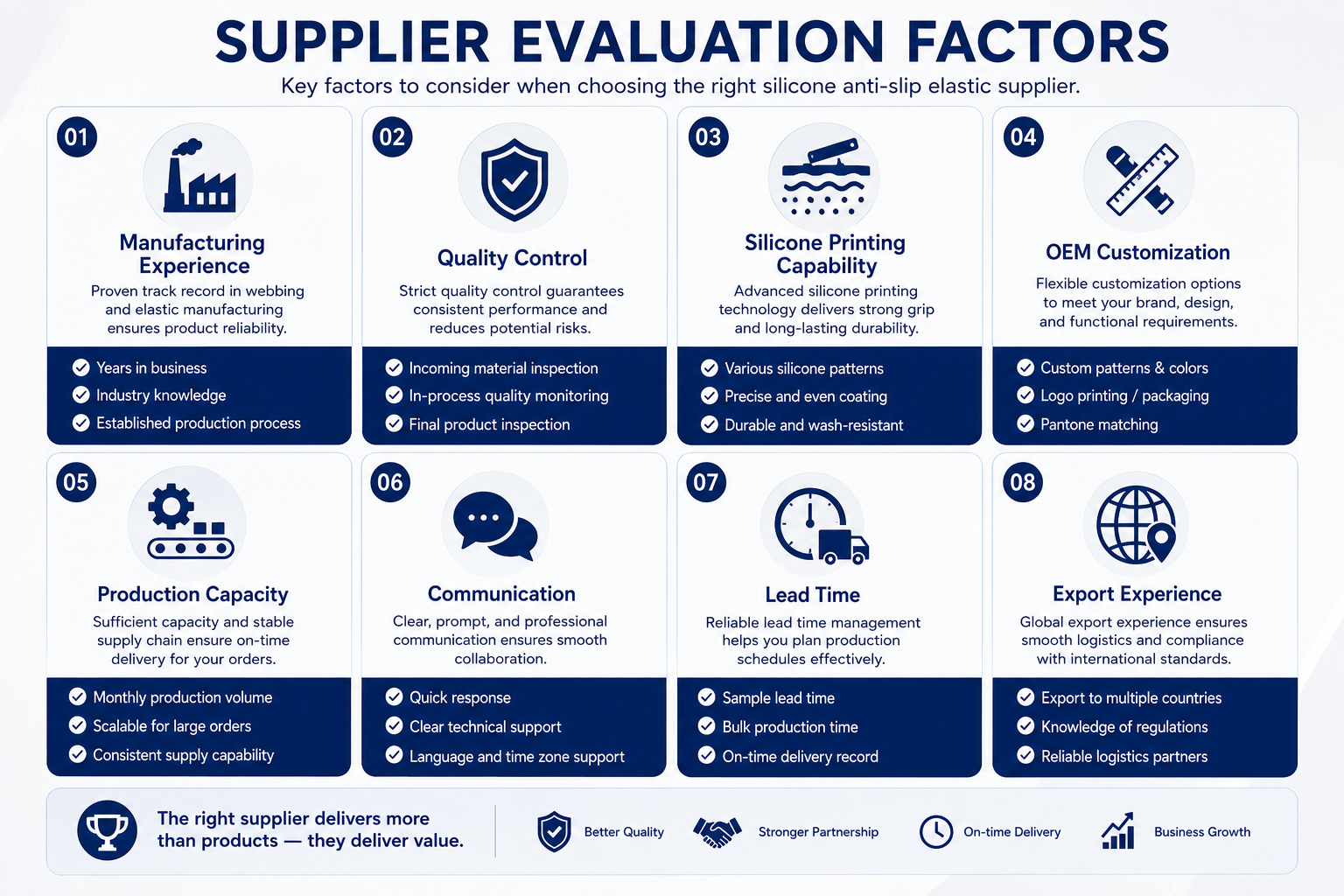
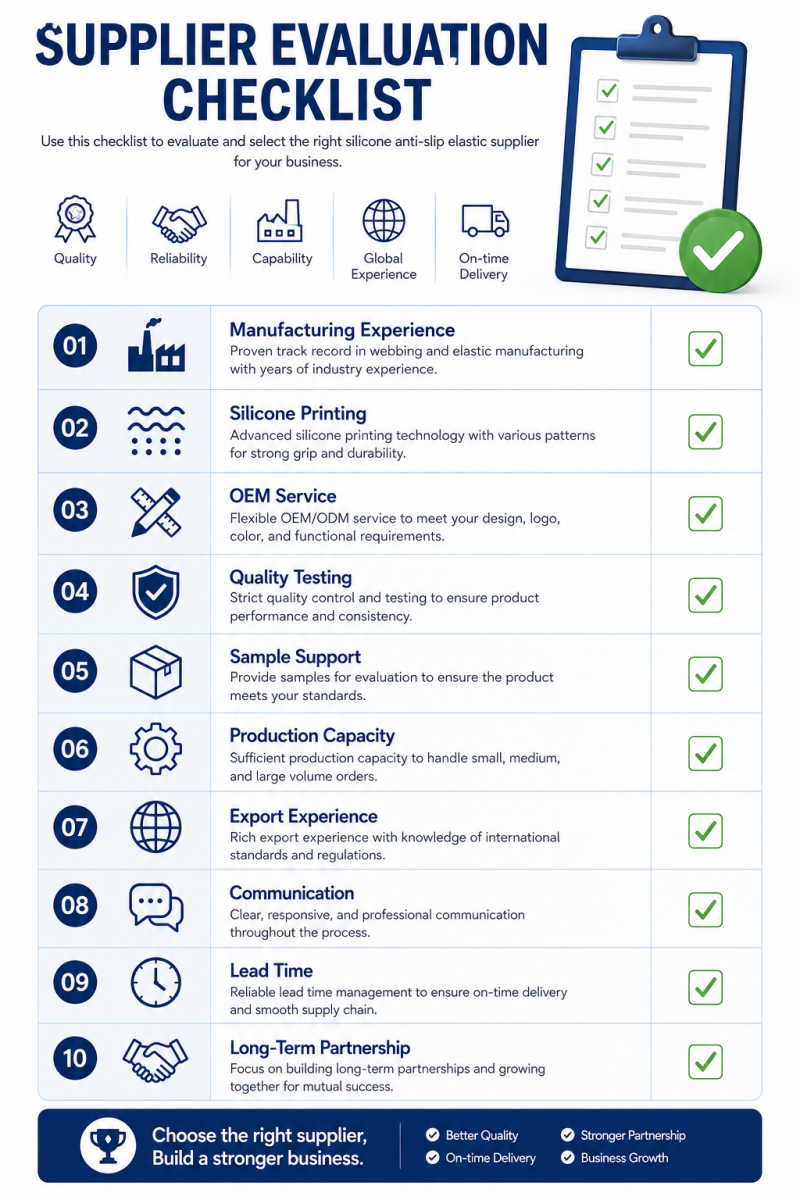
Supplier Selection ChecklistA structured evaluation process helps buyers compare suppliers objectively. Before requesting a quotation or approving production, consider the following key criteria.
Professional buyers often score suppliers using multiple criteria instead of making decisions based on a single quotation. This approach reduces sourcing risks and improves purchasing confidence.
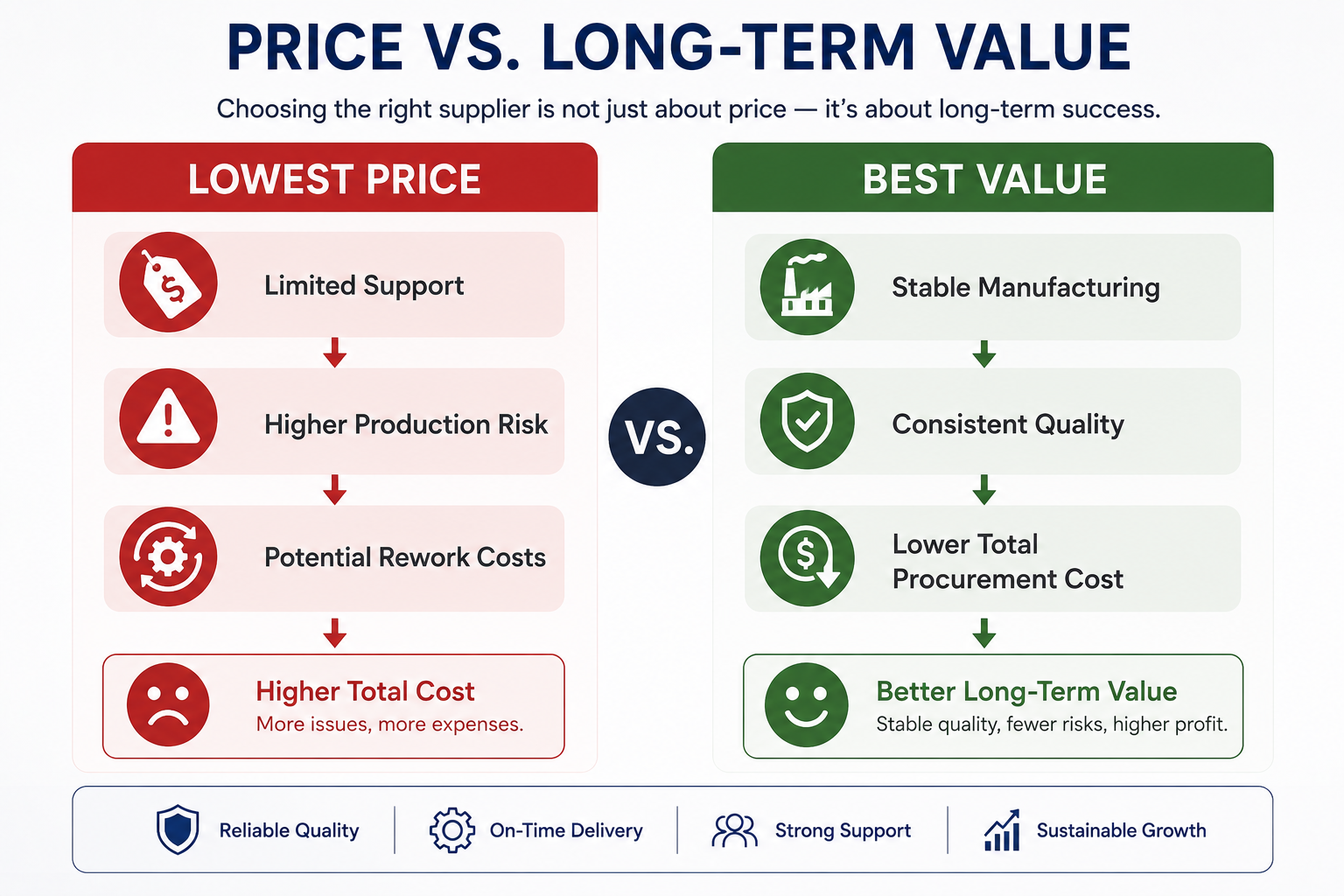
Think Beyond Unit PricePrice is always an important consideration, but experienced buyers understand that value and price are not the same thing. Competitive pricing is usually achieved through efficient production planning, optimized order quantities, stable manufacturing processes, and long-term cooperation—not simply by reducing production costs. Likewise, reliable product quality depends on standardized manufacturing systems, process control, and consistent inspection procedures.
Choosing a supplier with well-controlled production helps reduce product defects, minimize delivery delays, and lower future replacement or rework costs. Instead of asking only: "Who offers the lowest price?" Professional buyers often ask: "Which supplier provides the best long-term value?" This perspective is commonly referred to as Total Cost of Ownership (TCO)—evaluating the complete cost of sourcing throughout the product lifecycle rather than comparing purchase prices alone. When comparing suppliers, consider factors such as:
Ultimately, successful sourcing is based on balance rather than the lowest quotation. The best value comes from balancing quality, delivery, service, and price—not from choosing the lowest quotation.
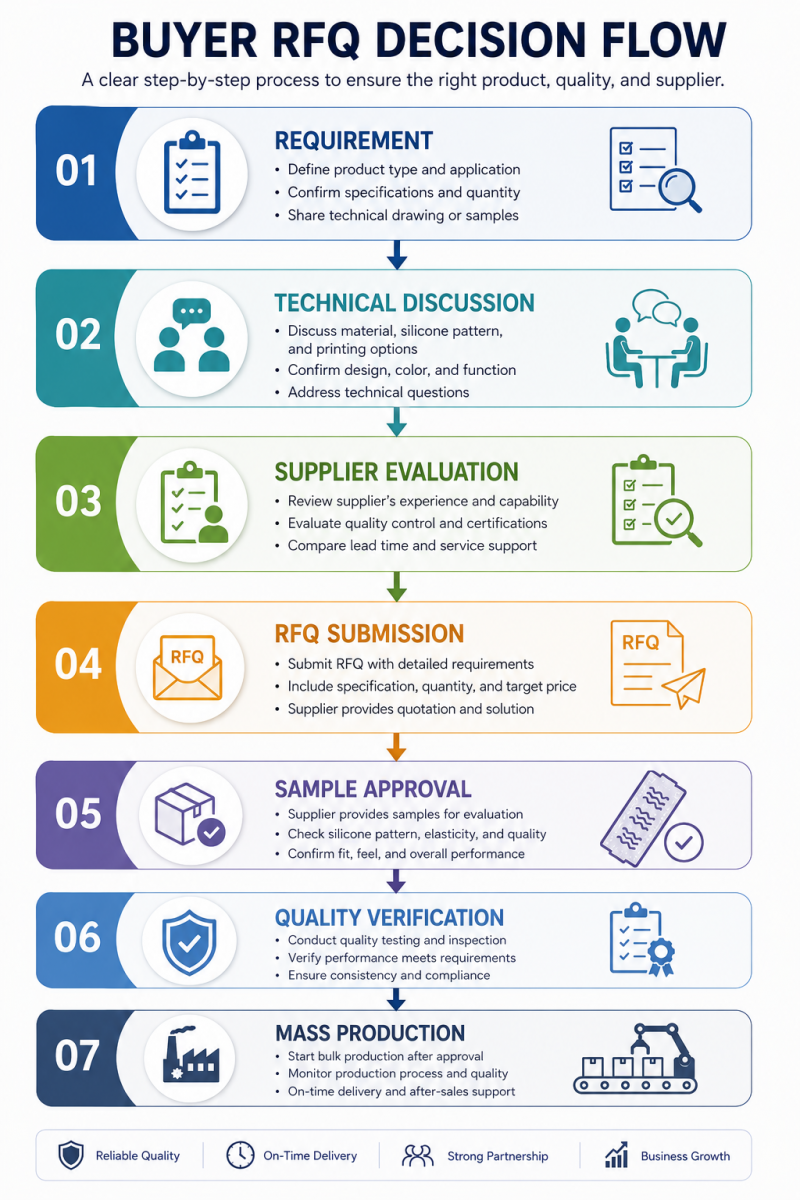
Questions Buyers Should Ask Before Sending an RFQBefore requesting a quotation, buyers should ensure they have enough information to evaluate both the product and the manufacturer. A well-prepared RFQ not only improves quotation accuracy but also helps identify suppliers with strong technical capabilities and project management experience. Instead of asking only about price, consider these questions during your supplier evaluation:
The quality of a supplier's answers often reveals more than the quotation itself. Clear technical recommendations, prompt communication, and practical manufacturing advice demonstrate experience and reduce sourcing uncertainty.
Comparing Suppliers Side by SideOnce quotations have been received, comparing suppliers using the same evaluation criteria makes the decision more objective. Rather than selecting the lowest offer immediately, assess each supplier's overall capability.
This type of comparison helps buyers identify potential risks before placing an order. A supplier offering slightly higher pricing may ultimately provide greater value through consistent quality, reliable delivery, and fewer production issues. Successful procurement is not about choosing the cheapest supplier—it is about selecting the supplier most capable of supporting your business objectives. Building a Long-Term Manufacturing PartnershipFor many apparel brands, importers, and OEM manufacturers, supplier selection is only the beginning of a long-term business relationship. A trusted manufacturing partner contributes more than production capacity. Over time, they gain a deeper understanding of your product requirements, quality expectations, preferred materials, packaging standards, and production schedules. This familiarity helps shorten development cycles, improve communication, and reduce the likelihood of costly errors. Long-term partnerships also provide advantages such as:
As your business grows, a reliable supplier becomes an extension of your development and sourcing team rather than simply a production vendor.
ConclusionSelecting a silicone anti-slip elastic manufacturer is a strategic procurement decision—not simply a price comparison. Throughout this ten-part guide, we have covered every major stage of the sourcing process, from understanding silicone anti-slip elastic and evaluating performance to selecting patterns, planning OEM production, verifying quality, avoiding common sourcing mistakes, exploring industry applications, and finally choosing the right manufacturing partner. By following a structured evaluation process, buyers can reduce procurement risks, improve product consistency, and build stronger supplier relationships that support long-term business success. If you are preparing your next silicone anti-slip elastic project, taking time to evaluate suppliers carefully before submitting an RFQ will lead to more accurate quotations, smoother production, and better overall results. Whether your application involves sportswear, underwear, medical garments, workwear, or other functional apparel, choosing the right manufacturing partner is one of the most valuable investments you can make in your supply chain. Related Articles in This Series
|
 |
Fu Jyi Lin Enterprise Co., Ltd. Copyright © 2014 |
| Address: 10071 No.17-1, SHAU ANN St., Zhongzheng Dist., Taipei City 100, Taiwan (R.O.C.)
TEL:886-2-2301-5900 , 886-2-2307-0952 FAX:886-2-2307-5424 , 886-2-2332-6930 E-Mail:info@fujyilin.com.tw |