


 | ||
|
| ||
News |


|
| Silicone Printing vs Woven Grip Elastic: Which Anti-slip Solution Is Best for Apparel? | |
2026-07-03 18:06:08 | |
Compare Two Leading Anti-slip Technologies for Better Garment Performance and Smarter Sourcing DecisionsIn today's apparel industry, product performance extends far beyond fabric selection. Consumers expect garments to remain comfortable, stable, and functional during daily activities, sports, medical support, and outdoor use. As a result, anti-slip technology has become an increasingly important consideration for apparel manufacturers and sourcing professionals seeking to improve product quality and customer satisfaction. Among the various anti-slip solutions available today, Silicone Printing and Woven Grip Elastic are two of the most widely adopted technologies. Both are designed to reduce garment movement, enhance fit, and improve wearing comfort. However, they differ significantly in manufacturing methods, grip performance, customization possibilities, production costs, and application suitability. For procurement managers, selecting the right anti-slip solution is about more than comparing prices. It requires evaluating long-term durability, production efficiency, branding opportunities, wash resistance, wearer comfort, and compatibility with the intended garment application. In our previous articles, we introduced the fundamentals of Silicone Anti-slip Elastic and explained how it enhances garment performance. This article builds on that knowledge by comparing Silicone Printing and Woven Grip Elastic side by side, helping apparel brands, OEM manufacturers, and sourcing teams determine which technology best fits their product development goals. Why Anti-slip Technology Matters in Modern ApparelAs garment designs become increasingly performance-driven, anti-slip functionality has evolved from an optional feature into an important value-added component across many apparel categories. Whether manufacturing sportswear, compression garments, medical supports, underwear, or outdoor clothing, maintaining garment stability directly affects comfort, confidence, and overall user experience. Garments that shift during movement can reduce performance, distract the wearer, and negatively influence brand perception. For apparel brands, effective anti-slip technology also contributes to lower product returns and improved customer satisfaction. For manufacturers and sourcing professionals, selecting the appropriate solution during product development helps reduce design revisions, improve production consistency, and achieve long-term product reliability. When comparing anti-slip technologies, buyers typically evaluate several critical factors:
Rather than asking which technology is universally "better," experienced sourcing teams focus on identifying the solution that best aligns with their product specifications, target market, and performance requirements. Silicone Printing vs Woven Grip Elastic: Quick Comparison
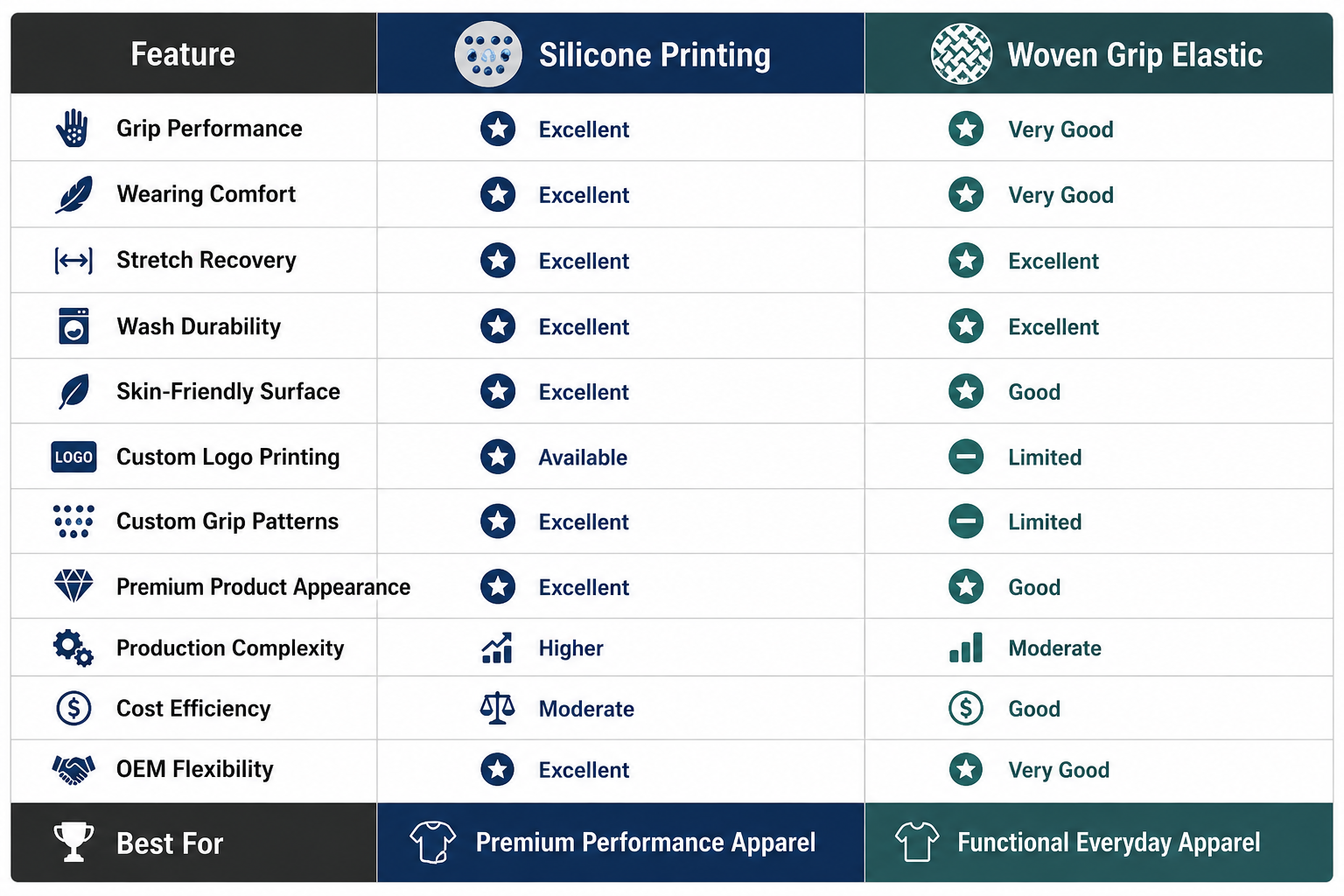
Before exploring each technology in detail, the following comparison provides a general overview of how Silicone Printing and Woven Grip Elastic differ across the characteristics most frequently evaluated by apparel manufacturers. Choose Silicone Printing when your project requires maximum grip performance, premium branding, customized grip patterns, or high-performance apparel applications. Choose Woven Grip Elastic when your priority is long-term durability, production efficiency, stable quality, and cost-effective manufacturing for large-volume programs. Both technologies deliver reliable anti-slip performance, but each excels under different product development objectives. What Is Silicone Printing?Silicone Printing is a manufacturing process that applies specially formulated silicone directly onto elastic webbing or garment components through precision printing techniques. Instead of relying solely on woven texture to create friction, the printed silicone forms a flexible grip layer that significantly increases contact between the garment and the wearer's body. Because silicone maintains excellent elasticity while providing consistent friction, it has become the preferred solution for many premium apparel brands seeking both functional performance and modern product aesthetics. Another significant advantage of Silicone Printing is its design flexibility. Manufacturers can create customized dots, stripes, wave patterns, geometric designs, or branded logos without affecting the stretch characteristics of the elastic. This allows brands to combine technical performance with distinctive visual identity—an increasingly important consideration in today's competitive apparel market. Silicone also performs exceptionally well under repeated stretching and laundering. Compared with many traditional grip materials, high-quality silicone demonstrates superior resistance to cracking, peeling, and long-term deformation, making it particularly suitable for garments that require consistent performance throughout their service life. Advantages of Silicone Printing
ConsiderationsAlthough Silicone Printing provides the highest overall performance, it generally involves additional manufacturing processes and specialized printing equipment. Custom silicone pattern development may also increase initial sampling time compared with standard elastic production. For premium brands, however, these additional investments are often justified through improved product differentiation, higher perceived value, and better long-term product performance. Recommended ApplicationsSilicone Printing is commonly specified for:
For brands seeking maximum garment stability, enhanced user comfort, and strong product differentiation, Silicone Printing continues to represent one of the most advanced anti-slip solutions available in today's apparel industry. ----------------------- What Is Woven Grip Elastic?Woven Grip Elastic is an anti-slip elastic developed through specialized weaving techniques rather than surface printing. By engineering the yarn structure and weave pattern, the elastic creates natural friction that helps garments stay securely in place while maintaining flexibility and wearing comfort. Unlike Silicone Printing, which adds a grip layer to the surface, Woven Grip Elastic integrates its performance directly into the construction of the elastic itself. This structural approach provides excellent durability and consistent performance without requiring an additional printing process. For manufacturers producing large production runs, woven grip elastic offers a practical balance between functionality, production efficiency, and cost control. Its simplified manufacturing process can reduce production complexity while maintaining stable product quality across multiple batches. Although the grip level is generally lower than premium silicone printing, Woven Grip Elastic delivers more than enough performance for many everyday functional garments where moderate anti-slip capability is sufficient. Advantages of Woven Grip Elastic
ConsiderationsCompared with Silicone Printing, Woven Grip Elastic provides fewer opportunities for visual branding. Custom logos, decorative grip patterns, and unique surface designs are more limited because the grip performance depends primarily on the woven structure rather than printed elements. For brands positioning themselves in premium sportswear or performance apparel, Silicone Printing may offer greater flexibility for product differentiation. Recommended ApplicationsWoven Grip Elastic is commonly selected for:
For buyers prioritizing production consistency, durability, and manufacturing efficiency, Woven Grip Elastic remains an excellent solution. Silicone Printing vs Woven Grip Elastic: Which Performs Better?Rather than asking which technology is universally better, experienced sourcing professionals evaluate which solution best supports the product's intended purpose. Silicone Printing consistently delivers higher grip performance, making it the preferred option for garments where movement control is critical. Running shorts, compression wear, cycling apparel, shapewear, and yoga clothing all benefit from silicone's superior friction, helping garments remain securely positioned during dynamic movement. Silicone Printing also provides greater design flexibility. Manufacturers can incorporate custom grip patterns, brand logos, and decorative elements that reinforce product identity while maintaining functional performance. This makes it especially attractive for premium apparel collections where branding and technical appearance influence purchasing decisions. Woven Grip Elastic, however, offers important advantages of its own. Because the grip characteristics are created during weaving, production is generally more straightforward, making it well suited for larger production volumes and cost-sensitive projects. It also delivers excellent durability and reliable performance across repeated washing cycles, making it a dependable choice for uniforms, workwear, and functional everyday apparel. Ultimately, neither technology replaces the other. Instead, each addresses different product development priorities. Choose Silicone Printing if your project requires:
Choose Woven Grip Elastic if your project requires:
Selecting the right solution early in product development can reduce sampling revisions, shorten development time, and improve overall production efficiency. Buyer's Selection ChecklistBefore requesting quotations from a manufacturer, procurement teams should clearly define their product requirements. A well-prepared RFQ not only improves quotation accuracy but also shortens development time and reduces unnecessary sample revisions. Consider the following questions before selecting an anti-slip solution: Product Requirements
Performance Requirements
Branding Requirements
Production Requirements
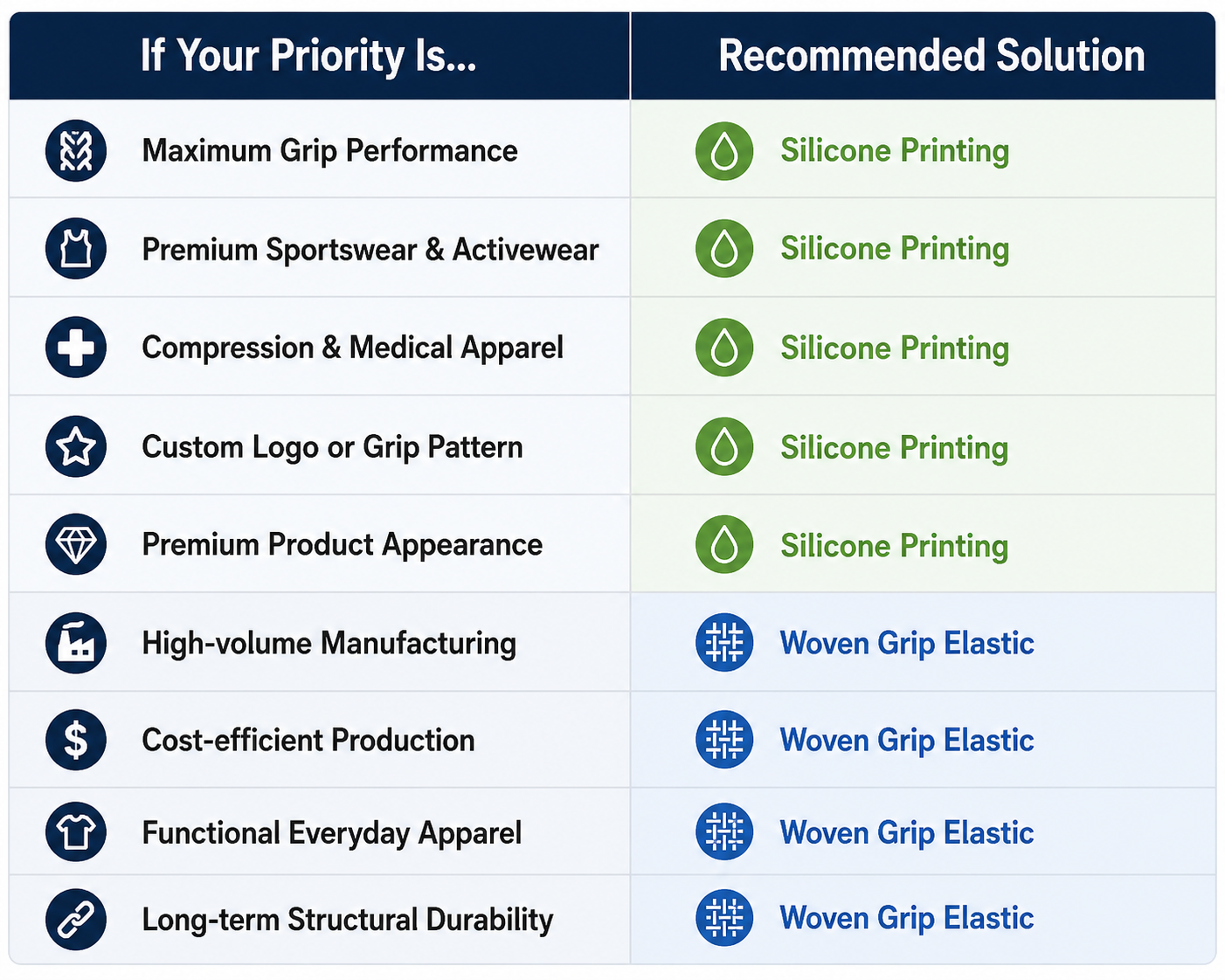
Providing this information early enables manufacturers to recommend the most appropriate solution while reducing development risks and improving production efficiency. Why More Global Apparel Brands Choose Silicone PrintingAs competition within the apparel industry continues to increase, brands are investing more heavily in product features that deliver measurable value to end users. Anti-slip functionality is no longer viewed as a simple accessory but as an important contributor to garment performance, comfort, and overall product quality. For premium apparel brands, Silicone Printing offers several advantages beyond grip performance. It allows designers to integrate functional elements with visual branding, creating products that not only perform better but also reinforce brand identity. Custom silicone patterns, logos, and technical aesthetics help differentiate products in increasingly competitive retail markets. From a sourcing perspective, Silicone Printing also supports long-term product consistency. High-quality silicone maintains flexibility after repeated stretching and laundering, reducing the risk of performance degradation throughout the garment's life cycle. This reliability contributes to improved customer satisfaction and helps protect brand reputation. While Woven Grip Elastic remains an excellent choice for many functional garments, Silicone Printing has become the preferred solution for brands focused on premium performance, technical innovation, and product differentiation. Rather than selecting an anti-slip technology based solely on initial production cost, leading procurement teams increasingly evaluate total product value—including durability, wearer experience, manufacturing flexibility, and long-term brand positioning. Transition to Part 3Now that the key differences between Silicone Printing and Woven Grip Elastic have been explored, the final section of this guide will summarize the comparison, answer frequently asked questions from apparel buyers, connect this article with the previous two guides, and explain how to request samples or discuss OEM development with an experienced anti-slip elastic manufacturer. ----------------------- Which Anti-slip Solution Is Right for Your Apparel Project?Selecting the right anti-slip technology depends on your product objectives rather than searching for a single "best" solution. Both Silicone Printing and Woven Grip Elastic provide reliable garment stability, but each delivers different advantages depending on performance expectations, production priorities, and brand positioning.
The following guide provides a quick reference for apparel sourcing teams during product development. Frequently Asked QuestionsIs Silicone Printing always better than Woven Grip Elastic?Not necessarily. Silicone Printing generally delivers higher grip performance and greater customization, while Woven Grip Elastic offers excellent durability, production efficiency, and cost advantages. The best choice depends on your product requirements and target market. Which solution is recommended for performance sportswear?For running apparel, yoga wear, compression garments, cycling apparel, and other high-performance products, Silicone Printing is typically the preferred choice because it provides superior grip and garment stability during movement. Can both solutions be customized for OEM projects?Yes. Both technologies support OEM manufacturing. Silicone Printing offers greater flexibility for custom grip patterns and logos, while Woven Grip Elastic can be customized in width, color, construction, and performance specifications according to project requirements. Continue Your Silicone Anti-slip GuideThis comparison is the third article in our Silicone Anti-slip Solutions Guide, designed to help apparel manufacturers and sourcing professionals make informed purchasing decisions. If you are new to Silicone Anti-slip Elastic, we recommend reading:
In the next guide, we will compare three additional anti-slip technologies—Rubber Coating, PVC Grip, and Textured Elastic—to help buyers understand when these alternatives may be appropriate for different apparel applications and production requirements. Request Samples or OEM ConsultationWhether you are developing premium sportswear, compression garments, medical apparel, workwear, or functional clothing, selecting the appropriate anti-slip technology begins with understanding your product goals and performance expectations. At Fu Jyi Lin Enterprise Co., Ltd., we specialize in OEM Silicone Printing, Woven Grip Elastic, and customized narrow fabric manufacturing for apparel brands worldwide. Our team supports product development from material selection and prototype sampling to mass production, helping customers achieve consistent quality, reliable performance, and efficient manufacturing. If you are evaluating anti-slip solutions for your next apparel project, we welcome you to contact us for technical consultation, sample requests, or customized OEM manufacturing support. |
 |
Fu Jyi Lin Enterprise Co., Ltd. Copyright © 2014 |
| Address: 10071 No.17-1, SHAU ANN St., Zhongzheng Dist., Taipei City 100, Taiwan (R.O.C.)
TEL:886-2-2301-5900 , 886-2-2307-0952 FAX:886-2-2307-5424 , 886-2-2332-6930 E-Mail:info@fujyilin.com.tw |